Argentina’s AI opportunity

I agree, this is akin to Ford recently taking a $19.5 billion dollar loss on it's electric car program because there simply wasn't enough demand. It will all depend on investor appetite I suppose. Metaverse was a spectacular flop. My father, believe it or not, founded one of the first internet VR worlds in 1995 called Cybertown. Even he couldn't believe it was being resurrected after over 20 years.

Once you charge for a free service the user count rapidly diminishes. Only 5% of youtube members pay for Premium. I could certainly see Government, research facilities, medicine and select professional applications paying for continuous or limited use. But the idea that it will displace all white collar jobs globally is of course a labor cost equation that is simply absurd to calculate when you consider that energy and chip costs are based on global prices. In other words, you have reverse wage arbitrage because the input costs are actually fixed on a global market. What this means is implementation will be unevenly distributed amongst high wage countries where it financially may justify the cost.
Makes total sense.
That's the thought but I've never heard it put that way, as a reverse arbitrage. Interesting easy to put it.

Unfortunately it is us plebs that will pay the learning curve price for layoffs and rehires and everything that occurs as a result.
 
Makes total sense.
That's the thought but I've never heard it put that way, as a reverse arbitrage. Interesting easy to put it.

Unfortunately it is us plebs that will pay the learning curve price for layoffs and rehires and everything that occurs as a result.
It makes for some fascinating analysis really....

When you think about global energy costs, so much of it is dependent on the distribution of carbon fuel from extraction point to dense population centers. AI turns much of that on it's head, because your extraction is no longer a carbon fuel to run human labor but rather a fiber optic channel to extract artificial labor. Much of the infrastructure required for human labor isn't necessary at that point.

It could have profound effects on the redistribution of dense population centers and the even the hierarchy of labor class between users and non-users.

In the meantime the sad reality is that AI could effectively put a ceiling on human computing labor costs. As efficiency reduces the chip costs it may further drop that ceiling (thereby opening new geographical markets). As a high wage country, it will disproportionately affect Americans for certain.

I read recently....

The farm worker was displaced by the tractors,
so the farm worker went to the factories,
the factory worker was displaced by the machines,
so the factory worker went to the office,
the office worker was replaced by AI,
so the office worker went ... where?

The anecdote above, although overly simplified, illustrates that labor value is increasingly becoming not only more specialized but more intellectually difficult. We could be witnessing a peak of labor participation in developed countries, which is not necessarily bad in the context of a declining population.
 
It makes for some fascinating analysis really....

When you think about global energy costs, so much of it is dependent on the distribution of carbon fuel from extraction point to dense population centers. AI turns much of that on it's head, because your extraction is no longer a carbon fuel to run human labor but rather a fiber optic channel to extract artificial labor. Much of the infrastructure required for human labor isn't necessary at that point.

It could have profound effects on the redistribution of dense population centers and the even the hierarchy of labor class between users and non-users.

In the meantime the sad reality is that AI could effectively put a ceiling on human computing labor costs. As efficiency reduces the chip costs it may further drop that ceiling (thereby opening new geographical markets). As a high wage country, it will disproportionately affect Americans for certain.

I read recently....

The farm worker was displaced by the tractors,
so the farm worker went to the factories,
the factory worker was displaced by the machines,
so the factory worker went to the office,
the office worker was replaced by AI,
so the office worker went ... where?

The anecdote above, although overly simplified, illustrates that labor value is increasingly becoming not only more specialized but more intellectually difficult. We could be witnessing a peak of labor participation in developed countries, which is not necessarily bad in the context of a declining population.
I get it, but this has also happened throughout history. The industrial revolution, the mass production of the automobile, electricity and motors, improvements in agriculture technology, the internet and now AI. It is certainly a disruptive technology, but as we've already mentioned it seems to have its limits and limited place of use currently.
It is great as a resource and tool, but its not yet at a level I think to fully replace mass labour.

We are finally at the point where they have automated enough manufacturing and robots and 6 axis robotics are pretty common etc, and its about 40 years after they said it would happen.

40 years offshoring of manufacturing took off, and 25 years ago once fiber got laid everywhere, offshoring of services took off, call centers, engineering support centers, moved to India, Carribean and other lower cost countries. Rural hospitals don't need radiologists because radiologists at other hospitals either nationally or internationally can review an X-ray.

There is obviously the potential to have far greater impact than other technological breakthroughs because it can impact so many fields at once.
Society will figure it out and if limits are required.

The priorities of society and focus may return to other things. Less processed foods, education, personal care for aging population etc. People may give up hyper consumerism, and step up against the monopolies and return to smaller local businesses, stop going out to restaurants that are all supplied by sysco now with the same stuff and prefer real food, etc. Its up to people to implement the change and world they want to live in.
 
Peter Thiel is here for AI + lithium + + + +
If he’s here for the lithium he’s being silly, that stuff is going to stay in the ground, or at least in the salt lakes on the altiplano.

More and more lithium is coming from recycled batteries, and sodium ion battery technology (much cheaper than lithium) is advancing very quickly.

I can find references and links, otherwise just ask your friendly AI.
 
If he’s here for the lithium he’s being silly, that stuff is going to stay in the ground, or at least in the salt lakes on the altiplano.

More and more lithium is coming from recycled batteries, and sodium ion battery technology (much cheaper than lithium) is advancing very quickly.

I can find references and links, otherwise just ask your friendly AI.
There are Chinese, Canadian, Australian and maybe others countries companies already operating and expanding their operations in Jujuy, Salta and Catamarca. Glencoe didn't own lithium mines in Argentina but I believe it has an agreement in place with at least one to source lithium which they market. There are also projects under RIGI for Lithium. Argentina is currently the 4th largest producer, around 8% of global production yet it has 21% of global resources.

There are huge resources between Argentina, Chile and Bolivia. Chile's previous government made it such that the state needed to have 50%+1 share of the profits and operation and that would be fine through Codelco the state copper producing company. Even though the new government is right wing, I don't believe they have reversed that policy yet. This is making Argentina a more promising place to invest in.

I believe most Argentinian sites produce a Lithium chloride or Lithium carbonate. this is then used to produce batteries.

Thiel had invested in as European battery plant, not in the production of raw Lithium products.

I think it would be great if they can get battery plants to do more of the value addition in the country. I think that might fall under some of the industries which super RIGI is applicable to.

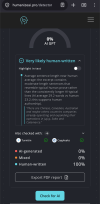
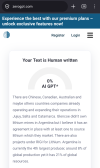
I have also included 2 screenshots from AI Detectors.

Screenshot_20260529-191417.pngScreenshot_20260529-191331.png
 
There are Chinese, Canadian, Australian and maybe others countries companies already operating and expanding their operations in Jujuy, Salta and Catamarca. Glencoe didn't own lithium mines in Argentina but I believe it has an agreement in place with at least one to source lithium which they market. There are also projects under RIGI for Lithium. Argentina is currently the 4th largest producer, around 8% of global production yet it has 21% of global resources.

There are huge resources between Argentina, Chile and Bolivia. Chile's previous government made it such that the state needed to have 50%+1 share of the profits and operation and that would be fine through Codelco the state copper producing company. Even though the new government is right wing, I don't believe they have reversed that policy yet. This is making Argentina a more promising place to invest in.

I believe most Argentinian sites produce a Lithium chloride or Lithium carbonate. this is then used to produce batteries.

Thiel had invested in as European battery plant, not in the production of raw Lithium products.

I think it would be great if they can get battery plants to do more of the value addition in the country. I think that might fall under some of the industries which super RIGI is applicable to.

I have also included 2 screenshots from AI Detectors.

View attachment 10992View attachment 10993
LOLOLOL! Peter Thiel interested in value-added production in Argentina?????????????

He was in Chile recently. You know he lobbied Kast to reverse Chile's 50%+1 share of profits and operation.

The only profits Milei and & Co. want are those that they can pocket.

It is not for nothing that Chile ranks 31st globally out of 182 countries and 2nd in Latin America (behind Uruguay) on the Transparency International Corruption Perceptions Index (CPI). And it is not for nothing that Argentina ranks 104th. Peter Thiel knows this.
 
AI has yet to turn a profitable number. The largest AI firms are running staggering losses (on the order of billions)
Anthropic says it will report profit at he end of this Q2. The top ones are starting to generate surprising revenues

techcrunch.com/2026/05/20/anthropic-says-its-about-to-have-its-first-profitable-quarter/
 
Anthropic says it will report profit at he end of this Q2. The top ones are starting to generate surprising revenues

techcrunch.com/2026/05/20/anthropic-says-its-about-to-have-its-first-profitable-quarter/
"...However, the WSJ reports, it may not remain profitable throughout the year due to the large compute costs it’s scheduled to incur."

Kind of a laughable statement when you think about it. I too will report a profit on June 1st when I get paid, though I may not remain profitable on June 10th when I have to pay my rent.
 
"...However, the WSJ reports, it may not remain profitable throughout the year due to the large compute costs it’s scheduled to incur."

Kind of a laughable statement when you think about it. I too will report a profit on June 1st when I get paid, though I may not remain profitable on June 10th when I have to pay my rent.
Milei declared a profit after stopping agreed infrastructure projects, inflating pensioners’ payments away, stopping mandated transfers to the provinces.

I quantified the overhang here:
Post in thread 'Caputo says dollar doesn’t float due to fear of "communism"'
https://baexpats.org/threads/caputo...at-due-to-fear-of-communism.49622/post-467637

I won’t be able to declare a profit until at least June 15 so you’re doing fine
 
Back
Top