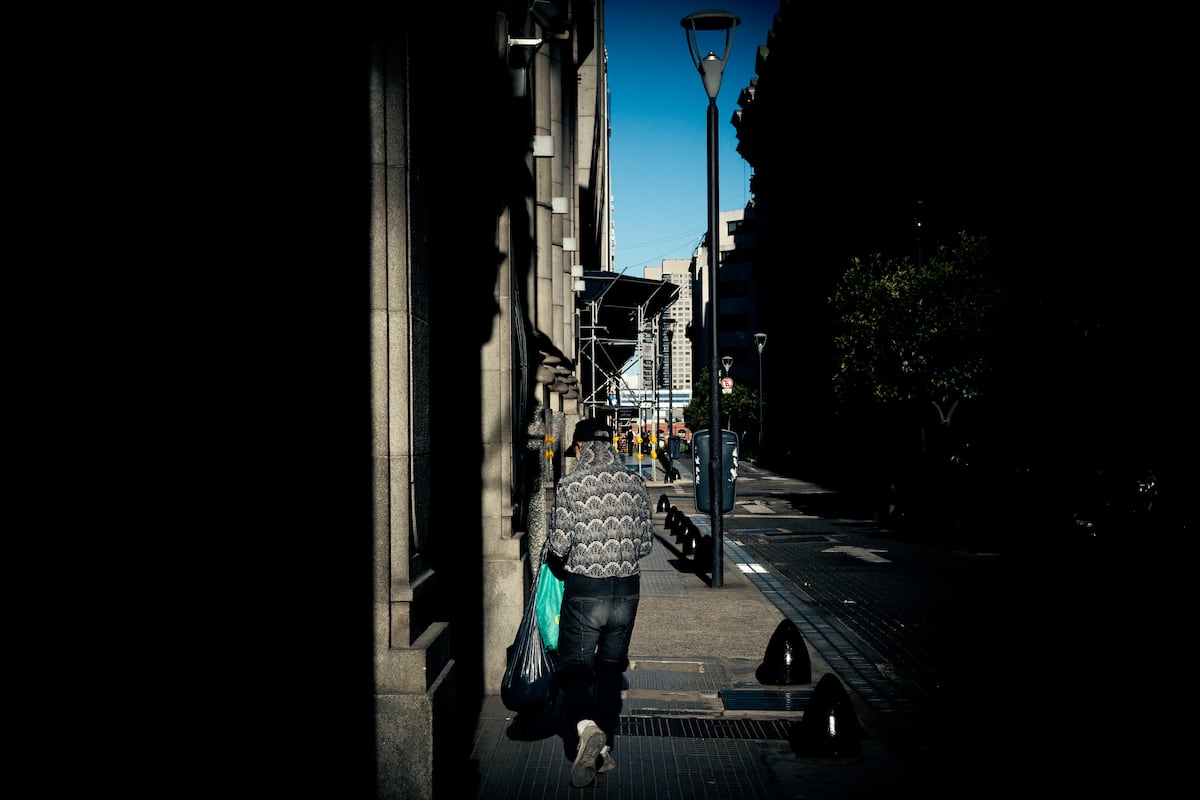
Homelessness is on the rise in Buenos Aires

carride

Registered
Joined
Feb 5, 2013
Messages
1,052
Likes
1,161
The latest report — presented a couple of weeks ago, based on data collected in November 2025 — concludes that there are currently 5,176 people in Buenos Aires who are homeless. A year earlier, there were 4,049. And, at the end of 2023, there were 3,286.
However, the current figure could be even higher. More than 30 political, humanitarian, labor and religious organizations are compiling a Popular Census of People in Situations of Homelessness. In their 2025 edition, they found that 11,892 inhabitants of Buenos Aires do not have a place to live: 64% more than in the previous count from 2019.
While the two reports differ in terms of the number — because they use different methodologies — they agree on one central point: the trend toward a dramatic increase

 
Anecdotally I'll say I've noticed fewer homeless than in winter 2024 which was really a bad situation. It was very noticeable then, several homeless people sleeping inside the subte stations, guys sleeping in the doorway next to my building etc. Don't see so much of that nowadays
 
Last winter, for the first time, I saw people sleeping in doorways and sidewalks in Colegiales. Single people, not families.
 
There are definitely more homeless people in Buenos Aires now. I live and work in Retiro, and there are noticeably more than last year.

Los Angeles and Buenos Aires are approximately the same size, both in population and in area.
LA has around 72,000 homeless this year, BA, 5000.
So, it could be worse.
A lot worse.

Unlike LA, where I lived for a decade, the homeless here are usually pretty polite, not drunkenly screaming obscenities, dying of drug overdoses in front of your favorite cafe, or defecating on the buses and subways.
Certainly, there is a bit more petty crime, but again, it could be a lot worse.
Many restaurants and bakeries in my neighborhood routinely give the homeless day old food, or free bottles of water.
And, at least the homeless here can forage in the garbage, and make a little money.
In the US, most dumpsters are padlocked shut.

The Villas have historically served to mitigate outright homelessness, but things are getting so bad here that they are no longer working as well in that capacity.
Where is Juan B Justo when we need him?
Starting around 1905 Juan B Justo and other leftists and socialists got the Argentine government to build a lot of housing for the poor and working class. They also just built a lot themselves, working with charities, the church, and donations.
Most of these were cooperativas, partly owned by the occupants.
 
There are definitely more homeless people in Buenos Aires now. I live and work in Retiro, and there are noticeably more than last year.

Los Angeles and Buenos Aires are approximately the same size, both in population and in area.
LA has around 72,000 homeless this year, BA, 5000.
So, it could be worse.
A lot worse.

Unlike LA, where I lived for a decade, the homeless here are usually pretty polite, not drunkenly screaming obscenities, dying of drug overdoses in front of your favorite cafe, or defecating on the buses and subways.
Certainly, there is a bit more petty crime, but again, it could be a lot worse.
Many restaurants and bakeries in my neighborhood routinely give the homeless day old food, or free bottles of water.
And, at least the homeless here can forage in the garbage, and make a little money.
In the US, most dumpsters are padlocked shut.

The Villas have historically served to mitigate outright homelessness, but things are getting so bad here that they are no longer working as well in that capacity.
Where is Juan B Justo when we need him?
Starting around 1905 Juan B Justo and other leftists and socialists got the Argentine government to build a lot of housing for the poor and working class. They also just built a lot themselves, working with charities, the church, and donations.
Most of these were cooperativas, partly owned by the occupants.
Thank you for your synopsis ... the problem isn't the less fortunate ... it is the "haves" selfish unwillingness to empathize and share ... as well as their refusal to pay their legitimate debt (taxes) to the system that made their wealth possible ... individual and corporate
 
Thank you for your synopsis ... the problem isn't the less fortunate ... it is the "haves" selfish unwillingness to empathize and share ... as well as their refusal to pay their legitimate debt (taxes) to the system that made their wealth possible ... individual and corporate
this is a global problem of late stage capitalism.
but Argentina had, before Milei, progressively better healthcare, housing, education, and social services over the years since WW2.
Now, we are backsliding towards the past.
 
I've heard that there are many eviction cases that the PJ party essentially ignored that are finally being processed under Milei and that this could be reflected in the growing percentage of homeless. I'm not sure where the stats on that would be though.
 
I've heard that there are many eviction cases that the PJ party essentially ignored that are finally being processed under Milei and that this could be reflected in the growing percentage of homeless. I'm not sure where the stats on that would be though.
seems like a libertarian pipe dream to me.
The City claims to have evicted 520 odd properties in the last year or so.
Not all were residential, and some of the largest ones have been squatted for up to 30 years, several for 10 years or more.
The total number of people squatting who were evicted is probably less than the increase in homeless, and that would assume zero of the squatters actually had jobs, families, or other places to go, which is unlikely.

I live in Retiro, and pass a dozen or so homeless people every day on a short walk- and I would say 90% of them are under 30 males.
A couple of years ago, there was a single woman in the neighborhood, sleeping rough, but she has moved on.
I do see a couple of mothers with small children asking for change, but never see them sleeping on the sidewalk.
My suspicicion is that there are more homeless women and children, but they are better served by charities, and are more willing to spend the night in places that forbid drinking and drugs, so you see them less on the street.

I think the general tightening of the economy, and the increase in prices for food, is a bigger cause, especially in people who are irregularly employed, making the equivalent of $100 to $200 a month for a family, and living in cheap rentals in the conurbano- they are probably more likely to be homeless now than 2 years ago.

I also think that Milei's gutting of the rent control and tenant laws 2 years ago had a far bigger effect on homelessness, as many people I know had their rents double or triple when he changed the regulations.
Some moved in with aging parents, some shared apartments when previously they had their own places, some moved out of the city, to cheaper places.
There was a recorded bump in homelessness right after the rent law change, in 2023, percentage wise about as big as in the last year.

Remember that while overall inflation is calculated based on a basket of products and services, rents went up by something like 300% at that time, and lower raises in, say, the cost of carne or coca cola masked that in the overall inflation rate.

 
seems like a libertarian pipe dream to me.
The City claims to have evicted 520 odd properties in the last year or so.
Not all were residential, and some of the largest ones have been squatted for up to 30 years, several for 10 years or more.
The total number of people squatting who were evicted is probably less than the increase in homeless, and that would assume zero of the squatters actually had jobs, families, or other places to go, which is unlikely.

I live in Retiro, and pass a dozen or so homeless people every day on a short walk- and I would say 90% of them are under 30 males.
A couple of years ago, there was a single woman in the neighborhood, sleeping rough, but she has moved on.
I do see a couple of mothers with small children asking for change, but never see them sleeping on the sidewalk.
My suspicicion is that there are more homeless women and children, but they are better served by charities, and are more willing to spend the night in places that forbid drinking and drugs, so you see them less on the street.

I think the general tightening of the economy, and the increase in prices for food, is a bigger cause, especially in people who are irregularly employed, making the equivalent of $100 to $200 a month for a family, and living in cheap rentals in the conurbano- they are probably more likely to be homeless now than 2 years ago.

I also think that Milei's gutting of the rent control and tenant laws 2 years ago had a far bigger effect on homelessness, as many people I know had their rents double or triple when he changed the regulations.
Some moved in with aging parents, some shared apartments when previously they had their own places, some moved out of the city, to cheaper places.
There was a recorded bump in homelessness right after the rent law change, in 2023, percentage wise about as big as in the last year.

Remember that while overall inflation is calculated based on a basket of products and services, rents went up by something like 300% at that time, and lower raises in, say, the cost of carne or coca cola masked that in the overall inflation rate.
I asked my spanish teacher years back about the guys who sleep on mattresses, and how neighbors here don't throw them out (which is different than what would happen if a property owner found a mattress on their property in the USA). She said that not all of those guys are homeless, some of them have homes in the villas hours outside of town, and come into the city on the train to do 'cartonero' or trash-picking work during the week, sleeping rough and eating whatever, but they go home on the weekend. Has anyone else noticed a 'schedule' of homeless people? There's a really loud guy (not sure if it's schizophrenia or drugs) on my street in a certain spot, but only on the weekends. And some guys in my barrio always look fairly clean. I remember reading about a day shelter with washing machines and showers, which I think is a real service.
 
Back
Top