
PERON, TRUMP and Decadence

DotConnector

Registered
Joined
Dec 22, 2025
Messages
23
Likes
43
I read an article that presents much of Trump’s way of governing as a Peronist way of governing a country.
The killing of a U.S. citizen by an ICE agent prompted state officials to start an investigation of the event and magically, just like in most parts of the world, the higher powers within government decided to STOP or block any investigation.
It turns out the FBI blocked state officials from investigating the citizen’s killing.
In a true democracy, the local government should have authority over a federal office (even the FBI) but under Trump’s government, the all mighty federal government seems to be above the states…
Peronism puts the federal state above all provinces and wields commanding power form it.
Is Trump’s plan for America to have an Argentina like reality?
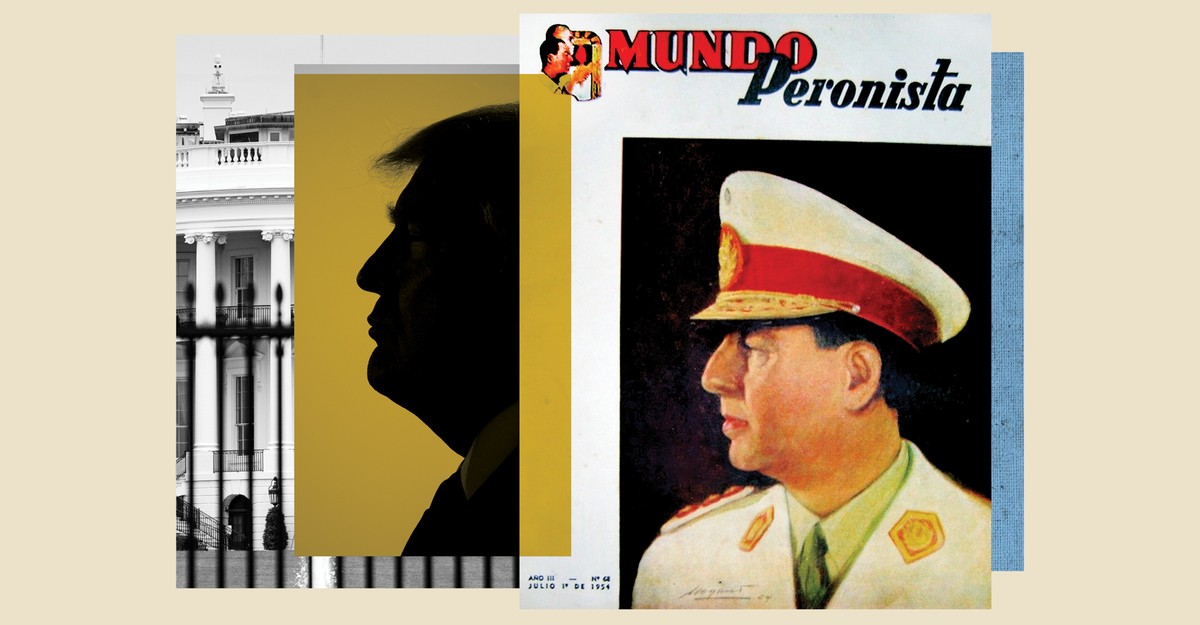
 
The similarity of Trump's policies to those of Peronism is as uncomfortable for the Peronistas as it is for Milei. So far, the only Peronist I've heard admit its overlap with Trumpism is Guillermo Moreno (who, by the way, applauds Milei opting to align with the US rather than China).
 
It baffles me that people think Trump & Milei are alike. Trump is IMO a raging peronista and Milei is a lot more like Regan when you break it down:

"Ronald Reagan's policies, known as "Reaganomics," focused on supply-side economics: significant tax cuts (especially for the wealthy), increased defense spending, reduced domestic social spending, and deregulation to spur economic growth, curb inflation, and limit government. Key actions included the Economic Recovery Tax Act of 1981 (major tax reductions), deregulation of industries, confronting striking PATCO air traffic controllers, and a strong anti-communist foreign policy, leading to economic expansion but also increased deficits and inequality. "
 
It baffles me that people think Trump & Milei are alike. Trump is IMO a raging peronista and Milei is a lot more like Regan when you break it down:

"Ronald Reagan's policies, known as "Reaganomics," focused on supply-side economics: significant tax cuts (especially for the wealthy), increased defense spending, reduced domestic social spending, and deregulation to spur economic growth, curb inflation, and limit government. Key actions included the Economic Recovery Tax Act of 1981 (major tax reductions), deregulation of industries, confronting striking PATCO air traffic controllers, and a strong anti-communist foreign policy, leading to economic expansion but also increased deficits and inequality. "
Trump wants to slash social services, cut taxes for the rich, dismantle all regulatory agencies, is strongly anti-Communist, or at least anti Chinese. How does this differ from Milei, other than the free trade thing, which Milei is waffling on re the EU-Mercosur free trade agreement because he doesn't want Trump angry with him?
 
Peron was a serving Army officer from 1911 until 1943, working his way up to General.
He was a minister of war, minister of labor, and vice president, in other people's governments, and then was elected president 3 times.
He was not born rich, did not inherit a half billion dollars.
He built universities, hospitals, roads, schools, public housing, ports, dams, and much more infrastructure.
He nationalized all kinds of industries, raised wages, benefits, and passed laws guaranteeing the right to healthcare and to education, and a retirement benefit for workers.
Both the Left wing political parties and the Right wing political parties opposed Peron in his first election.
He managed to work with the Church, the Military, and the Oligarchs to raise the standard of living for the working class.
He cut deals with companies like Siam to build automobiles, appliances, and machinery in Argentina, rather than importing them.
He created a manufacturing sector that still exists to a lesser degree, with industries making shoes, textiles and clothing, autos, machinery, tools, appliances, and much more. Most of those things are still made here.
Regardless of whether or not you have ideological disagreements with Peron, the tangible physical, financial, and societal improvements he made are still here.

Trump could not be more different.
He inherited vast wealth and was chauffered in a Cadillac to his only "job", working briefly for his father.
He never worked for anyone else, followed orders, or was promoted, never served in another government.
He has built nothing, improved nothing, and been damaging to manufacturing in particular- in the US, manufacturing jobs are down quite a bit this year, the manufacturing segment of the GDP is down as well.

Peron instigated the creation of an Argentine jet airplane, a sports car, a taxi, fridge for the masses (La Bolita) and much more.
Trump imported crappy golden tennis shoes, chinese baseball hats, and plays golf more than half of every month.
 
@LuckyLuke and @Ries ’s posts obviously disagree but each is largely correct. How this is, I don’t know. Maybe we should concentrate on Argentinian topics, that will be complicated enough (says the guy who spent half the afternoon arguing with a bot on a Venezuelan IG post 🙄 I really need more productive things to occupy my days with).
 
It baffles me that people think Trump & Milei are alike. Trump is IMO a raging peronista and Milei is a lot more like Regan when you break it down:

"Ronald Reagan's policies, known as "Reaganomics," focused on supply-side economics: significant tax cuts (especially for the wealthy), increased defense spending, reduced domestic social spending, and deregulation to spur economic growth, curb inflation, and limit government. Key actions included the Economic Recovery Tax Act of 1981 (major tax reductions), deregulation of industries, confronting striking PATCO air traffic controllers, and a strong anti-communist foreign policy, leading to economic expansion but also increased deficits and inequality. "
Trump has cut taxes for the wealthy, wants to increase defense spending to 1.5 Trillion, has slashed domestic social spending, and deregulated a bunch of industries, as well as confronting federal employees on every front, not just striking. (of course, since he dislikes some things, like, say windmills or electric cars, he has vastly increased regulations on them)
And he is indeed increasing deficits and inequality.

But he is indifferent to both democracy and communism, and has no consistent policy on anything.

He is driven by whims, strange beliefs that are usually easily disprovable, and his own ego.
In these things, he is similar to Milei, but unlike Milei, he has lots of money, complete control of both the judicial and congressional branches, and thus, can do whatever he wants, while Milei has to satisfy himself with just breaking things by executive order. (they have that in common, too)
 
"He managed to work with the Church, the Military, and the Oligarchs to raise the standard of living for the working class.
He cut deals with companies like Siam to build automobiles, appliances, and machinery in Argentina, rather than importing them.
He created a manufacturing sector that still exists to a lesser degree, with industries making shoes, textiles and clothing, autos, machinery, tools, appliances, and much more. Most of those things are still made here."

The unfortunate fact is that the high income nations in the southern hemisphere, Australia and NZ, have principal exports in the minerals and food/ agricultural sectors. Manufacturing cars or aircraft now requires massive capital expenditures, not to mention globally sourced inputs from the north. At the industrial fair in La Rural, the presses, water jet cutters for metal forming, and pitched to Argentine customers, were built in China. Even the shoemaking machinery sold in Boedo is of Chinese origin.
My TV and refrigerator, "Made in Argentina", are SAMSUNG, assembled in Tierra del Fuego, with little Argentine content. Peronism has left a legacy of failed national vanity projects, decrepit infrastructure, and what manufacturing remains, is globally uncompetitive.
 
"He managed to work with the Church, the Military, and the Oligarchs to raise the standard of living for the working class.
He cut deals with companies like Siam to build automobiles, appliances, and machinery in Argentina, rather than importing them.
He created a manufacturing sector that still exists to a lesser degree, with industries making shoes, textiles and clothing, autos, machinery, tools, appliances, and much more. Most of those things are still made here."

The unfortunate fact is that the high income nations in the southern hemisphere, Australia and NZ, have principal exports in the minerals and food/ agricultural sectors. Manufacturing cars or aircraft now requires massive capital expenditures, not to mention globally sourced inputs from the north. At the industrial fair in La Rural, the presses, water jet cutters for metal forming, and pitched to Argentine customers, were built in China. Even the shoemaking machinery sold in Boedo is of Chinese origin.
My TV and refrigerator, "Made in Argentina", are SAMSUNG, assembled in Tierra del Fuego, with little Argentine content. Peronism has left a legacy of failed national vanity projects, decrepit infrastructure, and what manufacturing remains, is globally uncompetitive.
Now wait a second…
Toast, are u saying Peronism left Argentina toast?
😜
 
"He managed to work with the Church, the Military, and the Oligarchs to raise the standard of living for the working class.
He cut deals with companies like Siam to build automobiles, appliances, and machinery in Argentina, rather than importing them.
He created a manufacturing sector that still exists to a lesser degree, with industries making shoes, textiles and clothing, autos, machinery, tools, appliances, and much more. Most of those things are still made here."

The unfortunate fact is that the high income nations in the southern hemisphere, Australia and NZ, have principal exports in the minerals and food/ agricultural sectors. Manufacturing cars or aircraft now requires massive capital expenditures, not to mention globally sourced inputs from the north. At the industrial fair in La Rural, the presses, water jet cutters for metal forming, and pitched to Argentine customers, were built in China. Even the shoemaking machinery sold in Boedo is of Chinese origin.
My TV and refrigerator, "Made in Argentina", are SAMSUNG, assembled in Tierra del Fuego, with little Argentine content. Peronism has left a legacy of failed national vanity projects, decrepit infrastructure, and what manufacturing remains, is globally uncompetitive.
Argentina still exports cars and trucks.
7 major global manufacturers have factories here.

Australia and NZ are not my area of expertise, but most countries that only export raw materials have pretty low standards of living.
The countries that are industrialized, which add value to raw materials, are the ones with healthy economies, with middle class citizens, and are generally considered better places to live- Taiwan, Korea, Japan, Singapore, even Malaysia and Thailand have large manufacturing bases, including automobiles.
Argentina actually exports all kinds of manufactured goods right now- including electrical transformers, agricultural equipment, commerical food production machinery, commercial laundry equipment, appliances, and tools, just to name a few.
I actually pay serious attention to textile and shoe machinery- and in Boedo, they sell both locally made and imported machines.
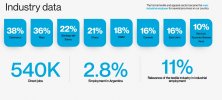
Here is a really interesting chart of the current impact of the textile industry on jobs in Argentina.
Its big business, and employs a lot of people.
Almost 3% of employment. Contrast that to the 2% of Australians who work in mining.


I have a 100% made in Argentina gas range in my kitchen, Morelli, which I bought when we remodelled in March. All my toilets, sinks, and bath faucets are 100% Argentine. My old kitchen sink, a Franke, was industria argentina, this time we bought a Brazillian sink we liked a bit better. Most of my light fixtures, all of my outlets and light switches, my new tablero (circuit breaker box and breakers) are industria argentina. Siam makes some fridges right in Avellenada still. I own a lot of Argentine made hand tools, sewing tools, rivet sets, industrial shelving, transformers, and many other things. My silverware, glasses, and plates, my frying pans, my clothes drying rack, and dozens of other household goods- all local.

Most tourists just have no idea how many factories there still are here.
 

Attachments

  • textile industry chart.jpg
    textile industry chart.jpg
    135.7 KB · Views: 2
Back
Top