Public transportation in the works

jantango

Registered
Joined
Mar 21, 2009
Messages
2,653
Likes
2,227
Last edited:
DSCN3952.JPGDSCN3953.JPGDSCN3954.JPGDSCN3955.JPGDSCN3956.JPGDSCN3957.JPGDSCN3958.JPGDSCN3959.JPGDSCN3960.JPG
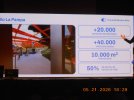
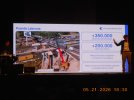
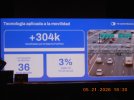
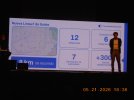
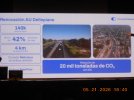
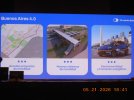
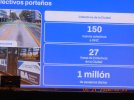
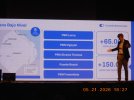
After the presentation, questions by the attendees were answered.
 
I think its great and am super glad to see they aren't going with Light Rail.
I am curious about the trade off between electric buses vs the ones that connect with an overhead wire. I would think those would be more efficient (lighter since there is no battery weight), and cheaper long terms (not having to replace batteries etc). I would think given the climate it would be a perfect place to apply it. Maybe its an issue of congestion above the roads where the wires would be.
 
I think its great and am super glad to see they aren't going with Light Rail.
I am curious about the trade off between electric buses vs the ones that connect with an overhead wire. I would think those would be more efficient (lighter since there is no battery weight), and cheaper long terms (not having to replace batteries etc). I would think given the climate it would be a perfect place to apply it. Maybe its an issue of congestion above the roads where the wires would be.
Apart from the historic trams which run on rails, I'm sure I've seen trolley-buses which run on the road on rubber tyres but pick up their electricity from overhead cables. I think they are only in one part of the city but I can't remember where I've seen them!
 
Apart from the historic trams which run on rails, I'm sure I've seen trolley-buses which run on the road on rubber tyres but pick up their electricity from overhead cables. I think they are only in one part of the city but I can't remember where I've seen them!
I can only find the track ones online. The PreMetro line. If you remember where they are please let me know.
The electric bus powered by overhead cable are a great option (what I thought when I hear tram style, used in mining also for certain routes, will reduce diesel and be cheaper). The style with tracks is a pet peeve of mine. You can make a bus lane only if you want. The benefits of the overhead cable ones are:
1) Lighter vehicle since there are no batteries and also much lighter than tracked versions, so more efficient in terms of energy per km.
2) Can change lanes or go around things (accidents).
3) Cheap to add routes, just transformer stations and overhead cable, no need to lay new tracks.
4) The biggest thing though which doesn't always show up in the project economic calculations are the sustaining capital investment requirements. Yes the investments will be there, but because of discounting future cash flows their impact is minimized to negligble. But the issue is that governments are typically running deficits, and particularly in the transportion services. Therefore, having millions per km to relay new tracks in 40 years, or in 10-15 years to replace the batteries, may still seem feasible in a spreadsheet, the actual money for that investment never exists and becomes a major crisis then, as well as traffic headache when you need to relay the tracks.

So I'm really glad they didn't go that route here, and hopefully they expand them. Lucky they don't have Bombardier or another local manufacturer that is pushing the tracked versions and the city(ies) goes with them for the sake of purely supporting a local vendor vs implementing a better solution. I can't understand why Toronto replaced the old ones, and implemented new routes with the track ones. Maybe if you can go driverless like the SkyTrain in Vancouver but that isn't even really an apples to apples comparison.
 
Now I'm thinking I may have transferred to Buenos Aires a flash-memory made during a visit to Cordoba city. I remember passing through an unfamiliar part of the city/a city and only saw the scene for a few seconds.

Poring over websites built by trolleybus nurds it seems there used to be eight Argentine cities with trolleybus infrastructure and now there are only three - with the future in Mendoza looking uncertain. Sorry to have misled you.
 
Now I'm thinking I may have transferred to Buenos Aires a flash-memory made during a visit to Cordoba city. I remember passing through an unfamiliar part of the city/a city and only saw the scene for a few seconds.

Poring over websites built by trolleybus nurds it seems there used to be eight Argentine cities with trolleybus infrastructure and now there are only three - with the future in Mendoza looking uncertain. Sorry to have misled you.

No worries
 
Apart from the historic trams which run on rails, I'm sure I've seen trolley-buses which run on the road on rubber tyres but pick up their electricity from overhead cables. I think they are only in one part of the city but I can't remember where I've seen them!
I haven't seen trolley-buses since the 60s. I see the historic tram every weekend.
 
The upfront cost of trolleys, installing the overhead wiring, is pretty large. In a city like Buenos Aires, already spiderwebbed with electrical, phone, and internet wiring, it would add a layer of haze obscuring the sky. Over say, 40 years, the amortization costs make them more reasonable, but Argentina doesnt have huge amounts of spare capital NOW, to invest in ugly wires, to save money over the next few decades. If anything, its the opposite, economically. Realistically, in heavy urban use, the replacement cycle for new electric trolleys would be more like five years, which would dent that 40 year amortization.
Plus, how, exaclty, do you run catenary wires (the technical name) on, say, Liberatador, or 9 de Julio, or across the intersection of Estado de Israel and Cordoba?

In the last couple of decades, the quality of batteries, lifespan, and recyclability has increased by huge amounts, and the cost has dropped by , literally, 99%.
There is lots of research and development going on right now to make batteries even cheaper.
Currently the lithium in the batteries is being recycled globally at a medium rate- something like 30% of the lithium is currently being pulled from a recycled battery- but by volume, more and more batteries are being recycled, and more cheaply, every year. The other ingredients in EV batteries, which are a big percentage of the mass of the battery, are 90% reclaimed when a battery is recycled.

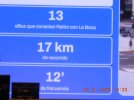
I have ridden on the new little battery buses on the retiro/boca run, and they are the perfect BA bus- smaller, more maneuverable, easy to change routes as needed, quiet and much more comfortable to board and to ride than the big old diesel collectivos.
Bus routes need to change all the time- if there is a big Paro, 50 colectivo routes change for a day. We had construction in my neighborhood that changed 6 or 8 routes for a week, and that is common. You install catenary wires, you are stuck with ONE route, no flexibility.

I really think that battery buses will be the future for BA, along with more Subte lines, always- the Subte is the cheapest long term, the least invasive, the fastest, and the easiest ot increase or decrease capacity on any given line without causing traffic jams and road damage. Because all the streets in BA are already under construction all the time...

 
Back
Top