Public transportation in the works

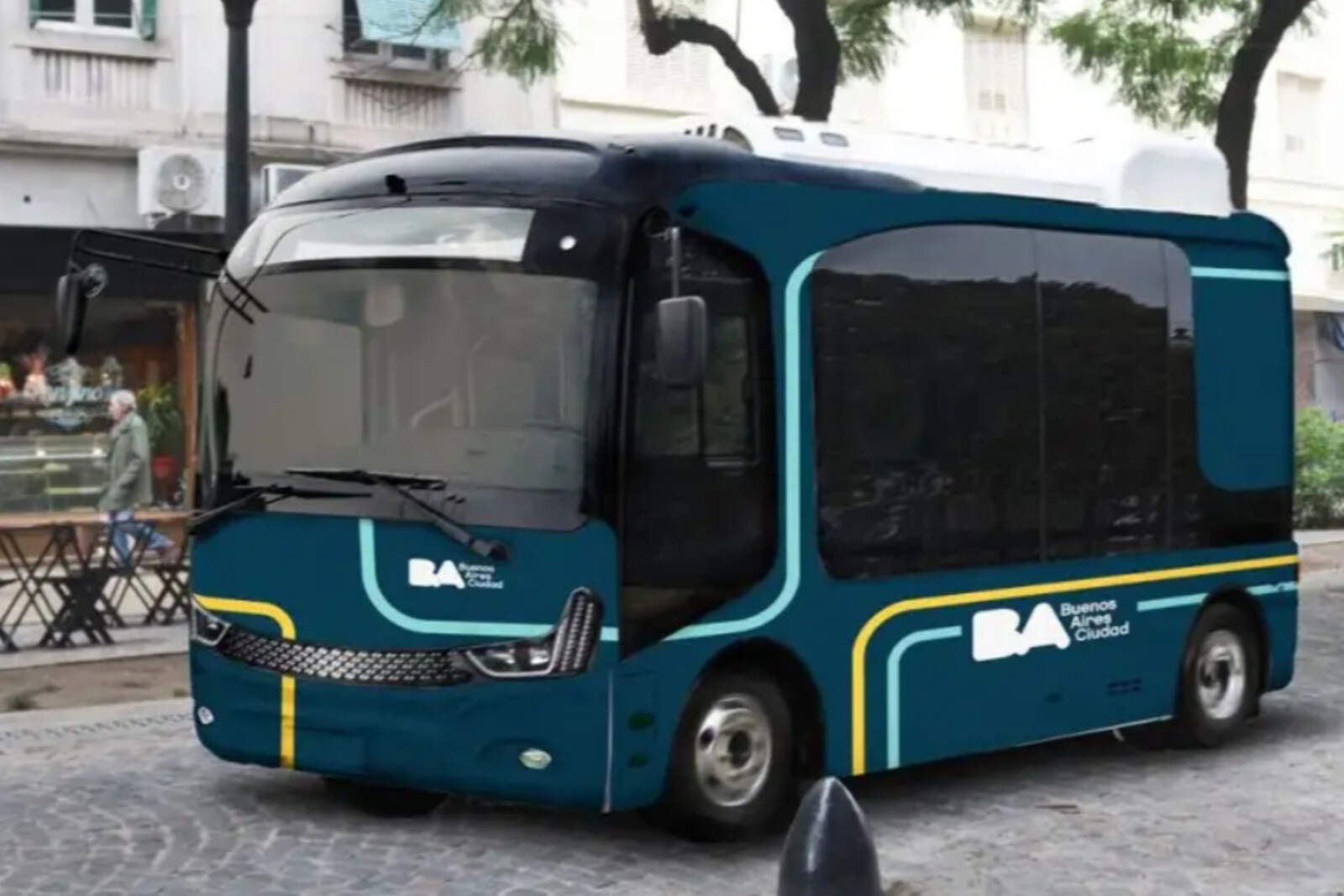
In terms of noise pollution, the traditional diesel buses are by far the worst culprits in the city. I live on the eighth floor of an avenue and the frequencies of the buses vibrating make my windows shake lol. The 59 line is piloting electric buses which is cool. I'd love to see the current fleet gradually phased out for electric.
The TramBus is whatever to me. It's electric, which is great, but it's basically a glorified Metrobus. You can't pay on the platform, which means delays when you have a line of people telling the driver their destination and paying. Something higher capacity like a tram I think would be better

Subte is severely lacking for a city the size of BsAs, and especially for connectivity between the north and south of the city. The current system is designed to get people to Microcentro, though Increasingly jobs and population growth are concentrating more in Palermo, Belgrano, Nuñez, Saavedra, Colegiales, Urquiza, Vicente Lopez, Caballito. Getting from Caballito (or anywhere south/west of there) to Belgrano is a nightmare. Something like the Linea I would make the city much more dynamic, as would the proposed Linea F.
We desperately need to extend the H from Hospitales to Saenz. It's just one more stop and would integrate the Belgrano Sur with the Subte. Once the Belgrano Sur viaduct project is finished and it gets to Constitucion, that'll worsen the bottleneck problem that station has. It would also be interesting to create an infill station at Facultad de Derecho to connect the H directly to San Martin, Mitre, and Belgrano Norte train lines. Plus it would integrate Carlos Mugica with the city. We could do that or extend the H to Retiro.
Extending all of the lines to General Paz would be amazing, but we already have frequency and capacity problems, so we're not prepared for something like that yet.
 
In Valparaíso. (Or Montevideo before 1992).
I first stumbled onto this continent in 2002 so it certainly wasn't Montevideo and I think it must have been 2007 when I last visited Valpo. Of the three cities in Argentina, the most recently visited is Cordoba so I am pretty sure that's where I muddled my memories.
 
In Valparaíso. (Or Montevideo before 1992).
we still have some in Seattle.
Its the second largest number of miles and routes in the USA.
But the catenary wire system dates to the 30s. And the right of way for the poles, the truck routes, the street trees- all of that was evolved over time to accomodate those electrical wires up in the air.
To build from scratch, you would run into all kinds of pre-existing conditions, developers who just built ten million dollar buildings who dont want the poles anchored to their skyscraper, or 150 year old doors in the sidewalk to load wine into subsuelos. BA is full of extremely oddball situations, corners, and intersections and underground spaces that have evolved over many many years.
 
Interestingly enough, the new BA electric buses cost three hundred million pesos each in early 2025 pesos. Something like $225,000 usd. The most recent Seattle overhead wire trolleys are costing Seattle about $1 million usd each.
4 times the price, although they are bigger.
Which kinda shoots down the argument that overhead wire trolleys are cheaper than electric buses. And battery costs for EVs just keep going down while efficiency goes up, every year.
 
Interestingly enough, the new BA electric buses cost three hundred million pesos each in early 2025 pesos. Something like $225,000 usd. The most recent Seattle overhead wire trolleys are costing Seattle about $1 million usd each.
4 times the price, although they are bigger.
Which kinda shoots down the argument that overhead wire trolleys are cheaper than electric buses. And battery costs for EVs just keep going down while efficiency goes up, every year.

I am not sure where the cost of 225k is coming from.
This site (Nota Alpie) suggests the project is costing $86M pesos, so somewhere around $60M, but it is specifying 52 buses.

Somewhere else I saw that it was $40M US for 50 buses, ~$800k/bus. So the difference might be in actual number of buses purchased and format, there are 12m normal buses and 17m articulated buses. The additional funds are also for the 20 charging stations.

It is interesting to see the cost come down even that much for these buses. For getting them implemented and running I still think its great to see over diesel, biodiesel/fuel, and light rail. The fuel based vehicles have all their mechanical parts and far more maintenance. The biofuels are horrible for maintenance, constantly requiring cleaning from buildup in the pistons as I understand.

The range stated on this site (Urban Transport Magazine) is 270km. So I am curious how fast the charging is, or if it is battery swap technology. In China they have this, cars drive in, and in 3-5 mins I think, the battery is swapped out. There are the new MW chargers from BYD that also charge in <10 mins. I guess I am curious how much time is lost to having them operate in order to recharge, and if they can get through the busy day, then I doubt taking one out of circuit to recharge in the evening is going to impact service too much.

I agree, they seem to be much cheaper now. And hopefully the batteries will continue to get cheaper and better. I think there is promising technology coming with a sodium type battery instead of lithium ion.

Anything but Light Rail.

The upfront cost of trolleys, installing the overhead wiring, is pretty large. In a city like Buenos Aires, already spiderwebbed with electrical, phone, and internet wiring, it would add a layer of haze obscuring the sky. Over say, 40 years, the amortization costs make them more reasonable, but Argentina doesnt have huge amounts of spare capital NOW, to invest in ugly wires, to save money over the next few decades.
Just to clarify my previous point because you kind of touched on it, the issue, yes the cost is more for the overhead system, but its much less than Light Rail which is what many cities (not in Argentina) seem to be selecting.
Not only is initial capital an issue, but so is sustaining capital. In 40 years the tracks need to be replaced, so at the following interest rates, the estimated cost is just a fraction in today's dollars when calculating NPV of the project, but in reality the cities never actually have the funds in the future for the major reinvestment. When they make the decision now, they are committing the city to either spend that money in the future, or scrap it and replace it with something else and leave the tracks and road in place.
2% - reduces cost to 45% of estimated nominal expense in today's dollars.
3% - to 31%
4% - to 21%
5% - to 14%

Subte is severely lacking for a city the size of BsAs, and especially for connectivity between the north and south of the city.
I suppose it depends where you come from. In North America I think many would say the Subte here is pretty good in terms of coverage. I don't know BA too well, but I trust your comments that sprawl warrants more service. I guess the question is does it need to be underground or not. Maybe more of a regional train can do the long distance hauling??
Either way, If they decide its worth it, I hope they do it now while labour is more affordable. Once salaries reach first world levels throughout the economy it becomes increasingly difficult to implement these style projects due to the much higher costs.
 
I am not sure what you have against light rail, but I like it.
I am absolutely biased- I have worked on Five different Light Rail systems over the course of my career, and was tunnel trained on 2, right of way trained on 4.
of course, I was a very minor sub, but I have been up close and personal with a lot of the hardware.
And I have ridden on light rail in a dozen countries, and many cities.
I always have found it to be a very efficient way of moving people, and the distinction between light rail and subway is actually pretty much rhetorical- several of the systems I worked on were both, on the same train, on the same route.
Some places and routes it makes sense, others it does not.
Personally, I think BA could really use light rail to ezieza. Most cities this size use light rail for airport service, and it works just fine in NYC, or Vancouver, or dozens of other cities around the world.
 
Cool. These are much smaller and different routes than the TramBus project in the originl post but still cool.
I'd hate to get stuck behind one though at 12 km/h.

I am not sure what you have against light rail, but I like it.
I am absolutely biased- I have worked on Five different Light Rail systems over the course of my career, and was tunnel trained on 2, right of way trained on 4.
of course, I was a very minor sub, but I have been up close and personal with a lot of the hardware.
And I have ridden on light rail in a dozen countries, and many cities.
I always have found it to be a very efficient way of moving people, and the distinction between light rail and subway is actually pretty much rhetorical- several of the systems I worked on were both, on the same train, on the same route.
Some places and routes it makes sense, others it does not.
Personally, I think BA could really use light rail to ezieza. Most cities this size use light rail for airport service, and it works just fine in NYC, or Vancouver, or dozens of other cities around the world.
My pet peeve is related to:
1) The interruption during construction. Installing new streets has been disasters in some places to local business for very extended periods of time. Much more than would be required to install overhead cables or just normal road replacement. This is then again repeated in the future. Maybe in some places they do it quicker and more organized. But in others it has devastated the local businesses in other places.

2) The huge cost for replacing the tracks in 40 years. The expense may not seem significant when evaluating the project because the cost is so far in the future that the time value of money makes it have a relatively small impact to project economics. But, it becomes a huge issue for the city when its time and they don't have the money.

3) LRT cannot change lanes. If there is an accident, or a unit stops working, or anything, it will just hold up the route until the obstruction is cleared or dealt with. The buses on the caternary cable can swerve around and carry-on. Again, might not happen frequently, and may be less of an issue depending on route such as airport corridor, but in a city it can be an issue.

4) The minor irritation is when there are major squeaks (? the sound when the wheels aren't rolling on the track perfectly, or when there is a slight curve).

I don't deny that its comfortable, etc. especially when new. But lets say you were going to run an LRT line in a corridor where it is only and no other traffic, ie. under high voltage power lines, how much cheaper and quicker would it be to do it with overhead cable buses that don't require the same sustaining capital overtime.

Depending on the route, if its a driverless system then it may very well be worth it also, such as Vancouver.

My issues with it are largely around implementations on congested city streets, and that this appears to be one such implementation.
 
2) The huge cost for replacing the tracks in 40 years. The expense may not seem significant when evaluating the project because the cost is so far in the future that the time value of money makes it have a relatively small impact to project economics. But, it becomes a huge issue for the city when its time and they don't have the money.
Here's a question for anyone who might know about urban roads: Has anyone noticed the exposed tram tracks that still run along parts of Las Heras in Recoleta and Parlermo? Does that mean this road has not been resealed in those parts since before 1961, the year the trams disappeared in Buenos Aires? Can a heavily trafficked city street go at least 65 years without a new layer of asphalt?

(PS: I imagined Ries would have a go at answering this question and I see as I typed away he was similarly typing away with a massive dissertation about the entropy of urban transport and roads, replete with street widths and other analysis. I await the answer to my question...)
 
Last edited:
Back
Top