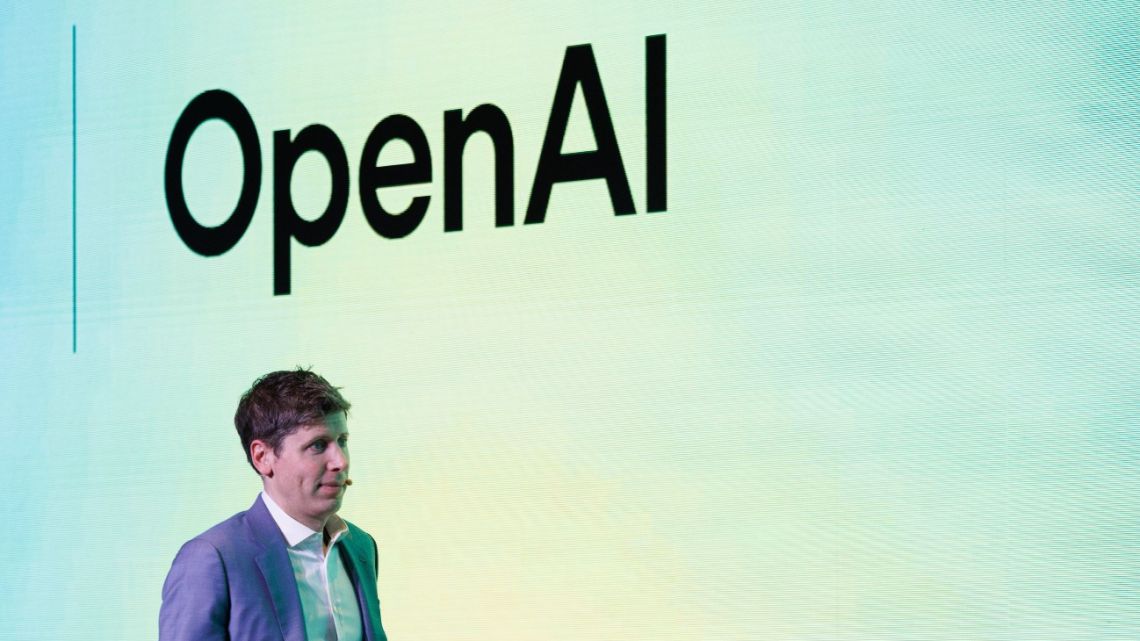
Argentina’s AI opportunity

MilHojas

Registered
Joined
Oct 9, 2007
Messages
2,276
Likes
2,440
Two US investor run companies marketing each other.
Doubts also surround Sur Energy, which Altman described as one of Argentina’s leading energy companies – a claim that warrants closer scrutiny.
Reports suggest that while OpenAI would agree to purchase everything produced by the data centre – which in reality does not represent a direct capital contribution – its partner Sur Energy would be in charge
Without questioning the entrepreneurial initiative, Sur Energy is a little-known company with no visible credentials in technology infrastructure of the announced scale

 
AI needs power, where will it come from? Paraguay is in much better shape to attract AI data centres (which provide almost zero employment anyway, no contribution to the economy other than via electricity consumption).
Patagonia is colder and therefore I imagine would require less energy.

Assuming natural gas power plants are used, in order to get them up and running in the timeframe discussed, it would create demand for additional steady O+G production.
 
These announcements exist to keep the AI hype bubble up. I don’t believe for one second this project is going to materialize.
So far nothing. This week BATimes reminds us of the hype that was conveniently presented just before the midterm elections.
“Stargate has not been presented. We do not even include it in the ‘announcements’ because there has really been no mention of timescale, sums or localities,” said Darío Clemente, a CONICET national science council researcher and a member of the RIGI Observatory of the FARN (Fundación Ambiente y Recursos Naturales) environmental NGO, which tracks RIGI investments, crosschecking data between the media, company statements and requests for access to public information.

 
So far nothing. This week BATimes reminds us of the hype that was conveniently presented just before the midterm elections.


I guess time will tell.
But they are popping up globally. With the gas field to run a natural gas plant in a generally cooler environment makes it fairly comparable to projects in Canada and an overall good choice.

With Super RIGI doing the rounds in Congress now, I can see them waiting for that since it would apply to this project and give further 10% tax reduction among other benefits.
 
AI has yet to turn a profitable number. The largest AI firms are running staggering losses (on the order of billions) despite getting basically subsidized energy costs. AI is a solution looking for a problem. It's entire integration is largely based on a deceptively low entry cost to displace existing structures in the hopes that it can capture enough market share to justify the real computing cost.

The amount of cash it is burning will eventually exceed the hype machine required to entice more investors. It's being called a bubble for a reason.
 
AI has yet to turn a profitable number. The largest AI firms are running staggering losses (on the order of billions) despite getting basically subsidized energy costs. AI is a solution looking for a problem. It's entire integration is largely based on a deceptively low entry cost to displace existing structures in the hopes that it can capture enough market share to justify the real computing cost.

The amount of cash it is burning will eventually exceed the hype machine required to entice more investors. It's being called a bubble for a reason.
Agree with all of it.
It definitely has uses but whether it can currently justify the costs is another thing that you have rightly highlighted.
I am curious how much of it is really for surveillance.

Then again, Amazon kept reinvesting everything until finally "turning a profit" in 2016 or so. Somehow it got away with expensing investments.
I see this as kind of the same. The major question is how long until the chips become obsolete, and require replacement, or what they will be able to do at that point.

Then you have companies like Microsoft which are stopping the use of it because it is costing more than the human employees would.

It definitely has uses, but I don't think how it should be used is fully understood by the C-suites etc, so for now its more of buzz word bingo. Most don't really understand the difference between automation vs AI anyways.

I guess we'll see how it goes. But as long as these companies are generating heavy cash flow, they can afford to invest even if it doesn't pan out. How many billions did Facebook spend on the Metaverse? Around $80B, but of course some of that is still used in other stuff, VR, and probably tech developed to be used elsewhere. But still, the scale of how much money these companies make is really unfathomable by most.

If a normal restaurant makes $150k/y (totally guessing no real idea), that is about 7 restaurants to make $1M, 7000 to make $1B.
Google, Apple, Microsoft, Amazon, Facebook, had made about $670B in operating Cash Flow in 2025. Free Cash Flow (After capital investments) was probably about 30% of that.

Just oeprating cash flow would take approx 4.7M restaurants to do the same operating cash flow.
If each restaurant had 4 employees, that would be around 15M jobs out of the ~160M participating in the labour market.

It really is mind boggling.

 
Agree with all of it.
It definitely has uses but whether it can currently justify the costs is another thing that you have rightly highlighted.
I am curious how much of it is really for surveillance.

Then again, Amazon kept reinvesting everything until finally "turning a profit" in 2016 or so. Somehow it got away with expensing investments.
I see this as kind of the same. The major question is how long until the chips become obsolete, and require replacement, or what they will be able to do at that point.

Then you have companies like Microsoft which are stopping the use of it because it is costing more than the human employees would.
I agree, this is akin to Ford recently taking a $19.5 billion dollar loss on it's electric car program because there simply wasn't enough demand. It will all depend on investor appetite I suppose. Metaverse was a spectacular flop. My father, believe it or not, founded one of the first internet VR worlds in 1995 called Cybertown. Even he couldn't believe it was being resurrected after over 20 years.

Once you charge for a free service the user count rapidly diminishes. Only 5% of youtube members pay for Premium. I could certainly see Government, research facilities, medicine and select professional applications paying for continuous or limited use. But the idea that it will displace all white collar jobs globally is of course a labor cost equation that is simply absurd to calculate when you consider that energy and chip costs are based on global prices. In other words, you have reverse wage arbitrage because the input costs are actually fixed on a global market. What this means is implementation will be unevenly distributed amongst high wage countries where it financially may justify the cost.
 
Back
Top