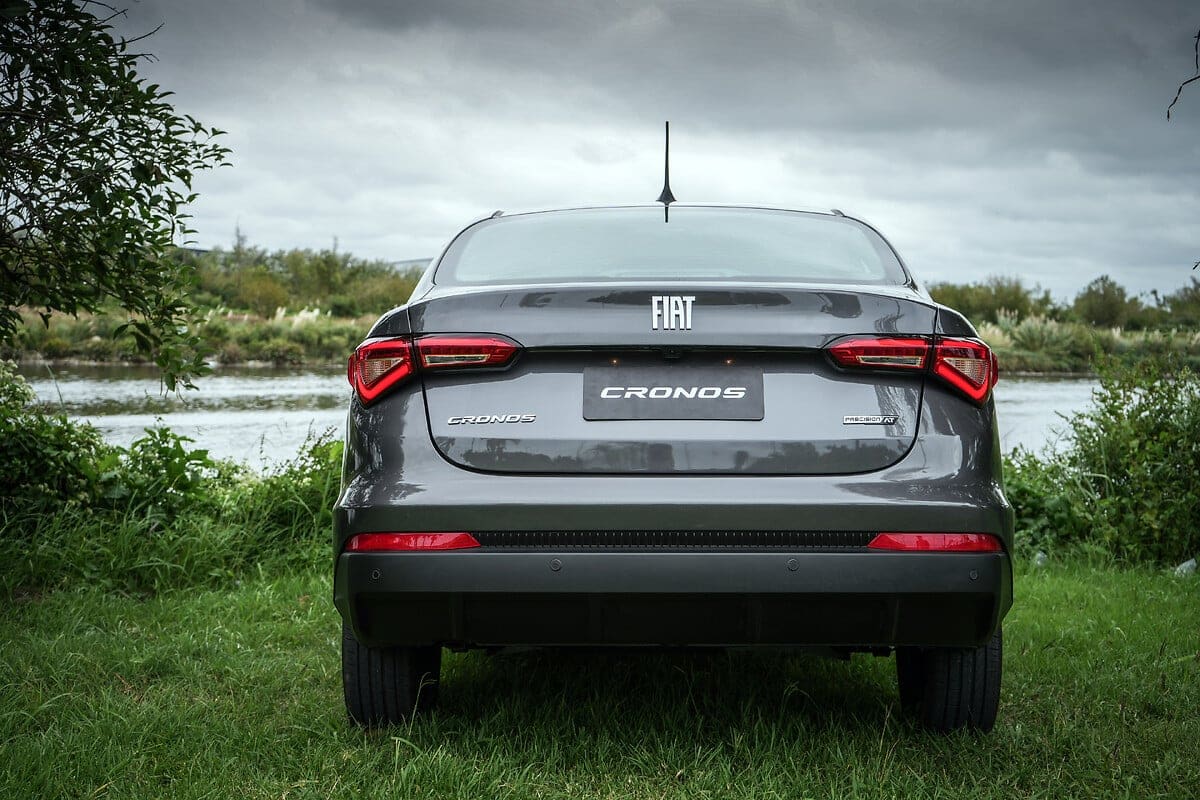
Argentina's auto parts industry feels the pain from shock therapy

The top 4 all all within 3% of each other- basically tied.
30,000 is not a lot of cars, in a nation of 40 odd million people.
Hilux prices range from around sixty million to ninety million pesos. vs fifteen for the cronos.
Yaris prices are roughly double that of the cronos.

The cronos actually sold 47000 units in 2023, before milei when people had more money.

but dollar for dollar the cronos disproves the argument that all cars are more expensive here.
and kangols, or partners or fiorino vans are all really cheap compared to the only us version thats even close, a stripper Ford Transit Connect.
The cheapest Ford transit in the USA was 35,000 in 2023, the last year they sold the small one- current big ones start around $45,000.
vs a stripper kangoo for 28,000,000, or, today, 20,000 dollars.

The chinese seem to be leading with SUVs- I have checked out the showrooms of BYD, for example, and they have electric hatchbacks and suvs that are very competitive- about 2/3 the price of ICE powered toyotas or fords.
 
vs fifteen for the cronos.
There are no 0 km cronos selling for $15M, those prices on ML are fake. It's a common way for dealerships to get leads on serious buyers using "accidental" blunders or using some fine print like "after trade-in". You'll notice most of the fake prices are by dealership "Auto Generali" with some as low as $5M.

That being said, I own a 2023 Cronos and while it doesn't even score 1 star on international safety ratings, it's an all around great car for the price.
 
I'm surprised the number of sales for the Hilux isn't higher honestly.
Its for both business and personal use and the quality is unmatched.
It would do a lot of damage to Ford, Chevy, GMC if allowed to enter the North American market.
Toyota sells the Tacoma in the North American market and it's been the best selling mid size truck for decades there.
 
There are no 0 km cronos selling for $15M, those prices on ML are fake.
I spent a few months of research and WhatsApp conversations and visits to the official dealerships. The prices they quote, are exactly what are also published in LaNacion newspaper and other sites. Every few months you will find the article for a car you are considering. There is no reason to browse MercadoLibre for a new 0km car

March:
  • Cronos Like 1.3 GSE: $31.120.000
  • Cronos Drive 1.3 GSE Pack Plus: $37.210.000
  • Cronos Drive 1.3 GSE Pack Plus CVT: $37.430.000
  • Cronos Precision 1.3 GSE CVT: $38.790.000

Here are all the prices you will pay of every car imported from China as of April

Good article explaining Argentina is one of only 3 exporters of the Hilux in the world. The Argentine-made Hilux was the best-selling vehicle in all of Latin America in 2025, with 162,000 units sold across the 23 countries in the region. Not mentioned in the article, you should wait 2 years or so until they retool the plant. It is an outdated vehicle compared to some of the mid-size pickup competitors here.
 
There are no 0 km cronos selling for $15M, those prices on ML are fake. It's a common way for dealerships to get leads on serious buyers using "accidental" blunders or using some fine print like "after trade-in". You'll notice most of the fake prices are by dealership "Auto Generali" with some as low as $5M.

That being said, I own a 2023 Cronos and while it doesn't even score 1 star on international safety ratings, it's an all around great car for the price.
I just use ml prices as a general guideline, although, for every other product besides a car, mercado libre prices are what you pay. I have all bought many different kinds of things on ML, from tools to appliances to kitchen ware to clothes to fabrics and furniture- and every other category the price is the price. I guess cars are just a wild west marketplace.
But wouldnt the ML price of a Jeep, say, be equally wrong as a cronos?
Regardless, I stand by my point that Argentina, in general has lower end merchandise, be it nail polish or automobiles, than they sell in higher income countries, so apples to apples comparisons are not always easy.
I am sure I can find a much more expensive auto oil filter in the USA or europe than in Argentina, where most consumers just dont want high end products.
Many companies dont even bother to stock the top end stuff.
My contractors always tried to down sell me on basic things like circuit breakers or type of plumbing pipe, because every other customer wanted the absolute cheapest possible, so the cheap is the first choice offered, and, at many wholesalers, the only option.
I spent a whole day recently at electronics supply houses looking for a very particular type of electrical switch. Nobody had it, they all had the same make and model of very low quality 3000 peso switch. Back in the USA, similar supply houses have a range of quality, all chinese, that is much wider.
Its the argentine way that every store has one cheap item, and one only, and they all come from the same importer/wholesaler.
 
Back to original topic about auto parts, as someone that doesn't really know much about cars, I was speaking with a friend at the gomeria here, and he was telling me how although the price per km might work out the same between chinese tires and the major foreign brands, the difference was:
1) same $/km but the lifespan of the Chinese tires might be half, 50k vs 100k km.
2) If you are driving in rougher terrain then if there are issues, the Chinese tires may only last 10k km whereas the foreign ones may last up to 40k
3) the foreign ones are about 10ply vs 5ply Chinese. just trying to flex the tire the foreign ones are much more rigid.
4) I think he was saying that the foreign ones are typically "truer" requiring a bit less balancing, and provide a smoother ride once you start traveling at 120km/h or thereabout.

So while they are cheaper, they aren't the same quality at a cheaper price.
 
It's an important detail for sure. Every time I had to fix my car in the US I requested 3 options from the mechanic, from cheap, mid-line, to performance parts. From there I could elect based on the labor required to access the part. The easier it was to access the part, the cheaper the part I could afford to put in. Heavy labor inaccessible parts often had to be the highest quality to reduce future labor costs. Not everyone can afford to buy only the best parts, one has to think carefully about selective investments. That being said, it is wild to see so many stores in Argentina dedicated to only the very cheapest parts and as Ries mentioned, sometimes the quality parts simply aren't available outside of special orders.
 
Back
Top